Her story, in cantos.
Su historia, en cantos.
Anacaona was a Taíno cacica and a poet. Here is her life, told the way she told her people's: in verses.
canto I
The name
El nombre
She was born around 1474 in Xaragua, a chiefdom in the west of the island the Taíno called Ayiti, which Spain renamed Hispaniola.
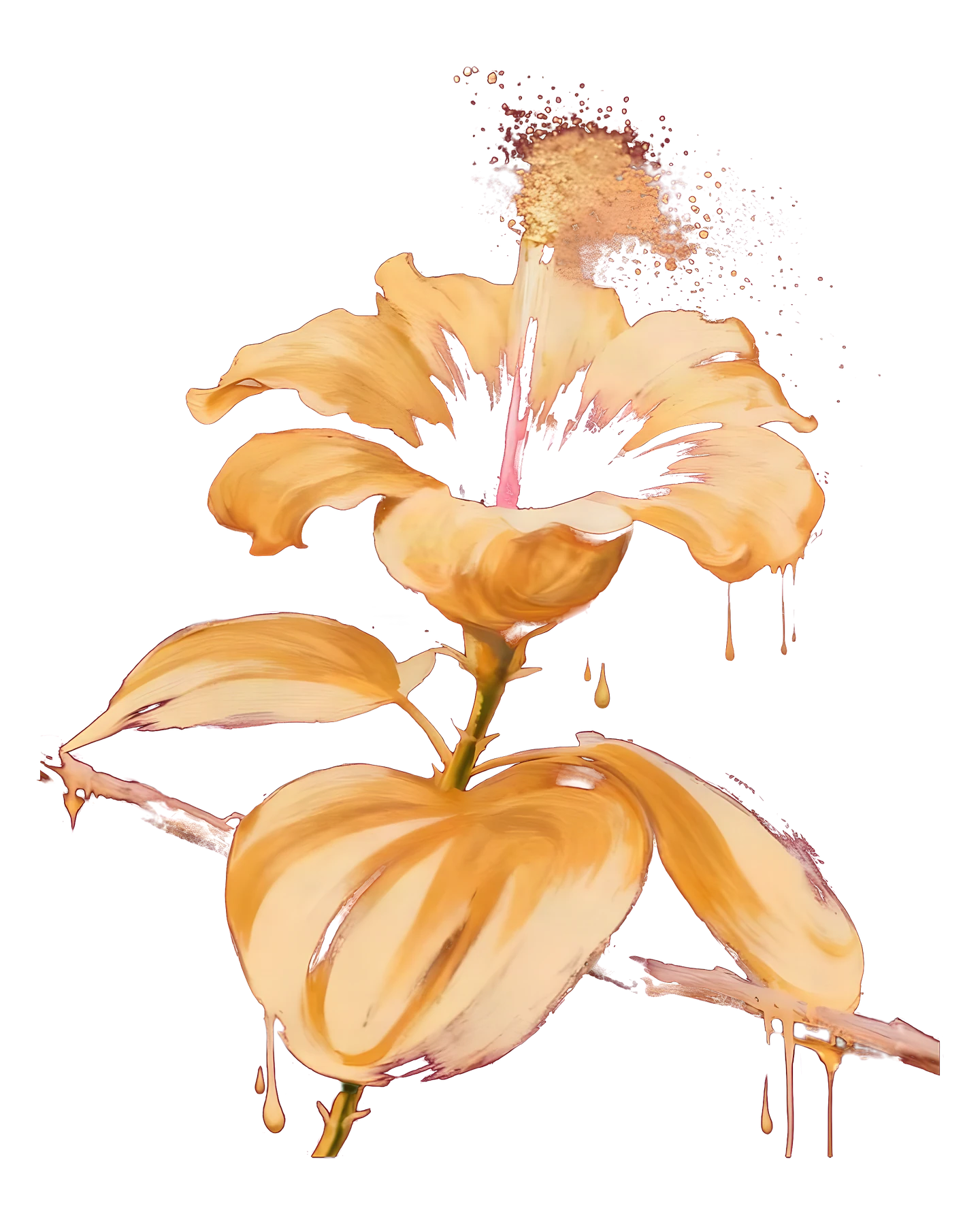
Her name is usually read as two Taíno words: ana, flower, and caona, gold. Anacaona, the golden flower.
Ana, flor. Caona, oro.
canto II
Xaragua
Her brother Bohechío was cacique of Xaragua. She married Caonabo, cacique of neighboring Maguana, and they had a daughter, Higüemota.
Xaragua was known across the island for its music, its gatherings and its pride.
Xaragua cantaba.
canto III
The areítos
Los areítos
The Taíno kept their history in areítos: songs and dances performed in the batey, the plaza, by many voices at once.
Spanish chroniclers, Bartolomé de las Casas among them, remembered Anacaona as a poet and a composer of areítos. Almost none of her verses survive.
Sus versos se cantaban en el batey.
canto IV
Cacica
When the Spanish came, Caonabo fought them. He was captured and died a prisoner at sea.
After her brother's death, around 1500, Anacaona led Xaragua herself: a cacica, a woman who leads.
Una mujer que dirige.
canto V
1503
In 1503 the Spanish governor, Nicolás de Ovando, came to Xaragua as a guest. She received him with feasting and song.
During the gathering his men seized and killed the caciques of Xaragua. Anacaona was taken to Santo Domingo and hanged.
No pudieron arrancar la raíz.
canto VI
The flower that stayed
La flor que se quedó
The Taíno lived across these islands, Ayiti and Borikén among them, and their words still live in ours.
Five centuries later she is still sung. Tite Curet Alonso wrote “Anacaona” for Cheo Feliciano in 1971, and her name is on avenues and towers in Santo Domingo.
We painted it on a wall, then on a bottle.
Todavía la cantamos.
Every woman who wears it is the flower.
Cada mujer que lo lleva es la flor.